GE Vernova Inc. (NYSE: GEV) today announced two significant advancements in the development of hydrogen-ready aeroderivative gas turbine solutions, both achieved at its new dedicated hydrogen testing facility at the Global Technology Center in Greenville, South Carolina.
The company has officially validated the performance of its LM2500XPRESS* aeroderivative gas turbine package for operation on fuel blends containing up to 50% hydrogen in a Dry Low Emission (DLE) configuration and has successfully completed testing of its LM6000VELOX* aeroderivative gas turbine package in a Singular Annular Combustion (SAC) configuration to validate its 100% hydrogen capability. GE Vernova unveiled the announcement as part of its comprehensive engagements in COP31 programming in Antalya.
Building on this legacy of innovation, GE Vernova has now surpassed 11 million operating hours on hydrogen and hydrogen-blended fuels across its global gas turbine fleet. As a world leader in gas turbine fuel flexibility—with more than 120 gas turbines that have operated or continue to operate on fuels containing hydrogen—the company demonstrates proven, real-world operational reliability.
Once produced, hydrogen can be used as a fuel for power generation. Gas turbines capable of operating on hydrogen can support a range of industrial applications, including steel, refining, and petrochemicals.
As the global energy landscape evolves, the demand for fast, flexible, and more sustainable power has become crucial. Aeroderivative gas turbines provide fast-starting, flexible power generation that helps stabilize electric grids, meet peak demand, and respond to changing system conditions. These operational characteristics allow for the management of peak demand and grid fluctuations, ensuring a steady supply of power to industrial and municipal operators, including data centers and utilities. By integrating these hydrogen-ready technologies, GE Vernova is providing a bridge for customers to use today's fuels while preparing their infrastructure for lower-carbon options as the energy transition progresses.
“These milestones represent a crucial step in GE Vernova’s commitment to accelerating the energy transition by providing hydrogen-ready solutions that allow customers to lower carbon emissions while maintaining the rapid-start reliability essential for grid stabilization” said Cecilia Giovannelli, CEO of GE Vernova's Gas Power Aeroderivative gas turbine business. “By rigorously testing these solutions under real-world conditions and beyond, we are doing more than solving today’s technical challenges; we are engineering more sustainable infrastructure to power modern life in the future. Our mission is to deliver the affordable, reliable energy that communities depend on to thrive, ensuring that health and economic prosperity grow in lockstep with our decarbonization goals."
Technical Achievements in Hydrogen Combustion
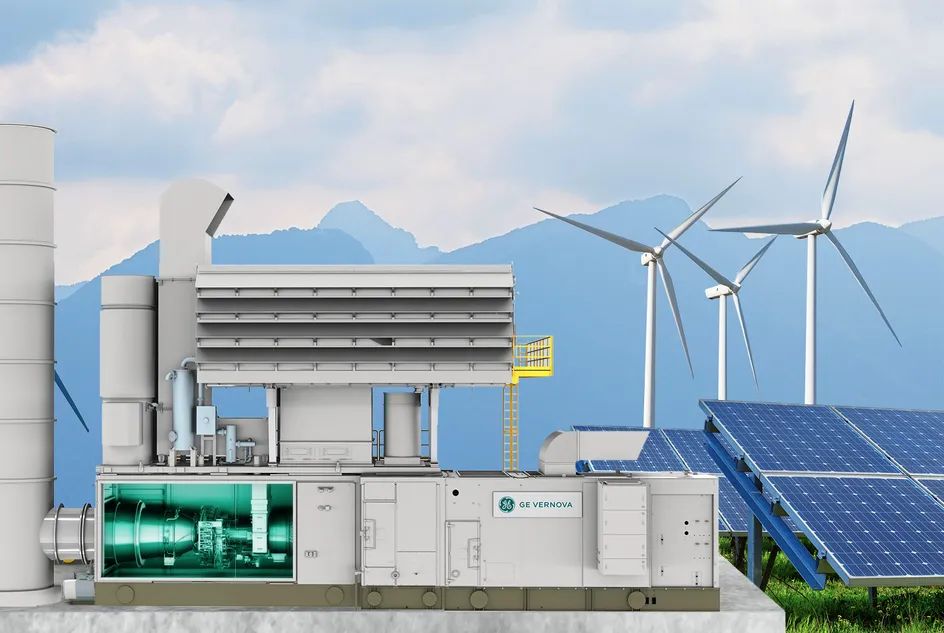
- LM2500XPRESS Validation: The LM2500XPRESS, a highly flexible, modular package derived from aviation technology, has been successfully validated for up to 50% hydrogen blending in a Dry Low Emission (DLE) configuration. This provides operators with a scalable path to reduce CO2 emissions while retaining the unit’s ability to reach full power in five minutes or less. With more than 1150 units sold and more than 200 million operating hours, the LM2500 remains one of the world’s most widely adopted gas turbines, supporting mission-critical applications ranging from industrial cogeneration and district heating to data centers and grid support.
- LM6000 100% Hydrogen Testing: In parallel, the LM6000 platform has been successfully tested using advanced Single Annular Combustor (SAC) systems to validate its capability to operate on 100% hydrogen. This achievement is the result of rigorous engineering mitigating the unique challenges of hydrogen combustion, ensuring stable, reliable operation. GE Vernova has an installed and shipped base of nearly 1,350 LM6000 gas turbine units operating across approximately 60 countries.
Expanding Global Testing Capabilities: The completion of the Aeroderivative testing facility, part of the broader investment in Greenville facility announced in 2025, marks a crucial step in the realization of the company’s strategic commitment to US manufacturing. By establishing this dedicated laboratory, the Global Technology Center has increased its capacity to support the validation of improved product capability such as hydrogen-ready power solutions. This integrated site is now fully equipped to accelerate product testing, enabling GE Vernova to reduce development lead times and provide enhanced support to customers worldwide.
GE Vernova's hydrogen combustion technology allows power plants to reduce carbon emissions of their existing gas turbines by implementing system modifications which can enable them to run on a wide range of hydrogen concentrations up to ~100% by volume. The retrofitting process involves upgrades for reliable operation.
Beyond aeroderivative solutions, GE Vernova’s hydrogen capabilities also extend to its heavy-duty gas turbine portfolio. The company’s current HA-class gas turbines, including the 7HA and 9HA platforms, can burn up to 50% hydrogen by volume when blended with natural gas using the standard DLN2.6e combustion system. GE Vernova’s H-class technology is widely deployed across the Gulf Cooperation Council (GCC) with units installed in Saudi Arabia, the United Arab Emirates and Bahrain.
Global Projects & Testing: Major milestones include hydrogen blend deployments and tests at facilities such as DeBary (USA), NYPA Brentwood (USA), Tallawarra B (Australia), and Guangdong Huizhou (China).