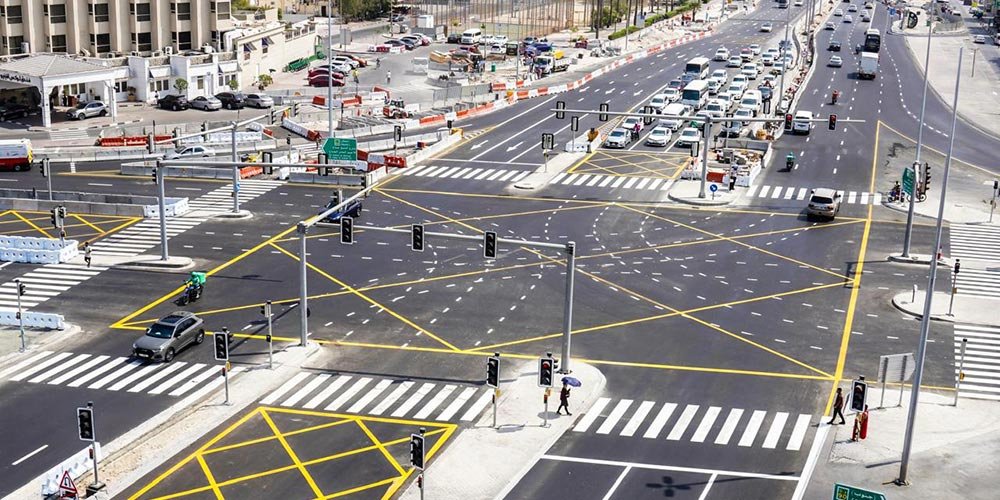
Dubai’s Roads and Transport Authority (RTA) has completed converting Al Satwa Roundabout into a signalised intersection, alongside associated road and infrastructure enhancements.
The project improves traffic flow through one of the area’s key intersections, cutting journey time by 50% and reducing waiting times and traffic queues by up to 60% during peak hours.
By improving traffic flow along the corridors and streets connected to the intersection, the project delivers a smoother and more efficient mobility experience for road users. It cuts journey time by 50% and reduces waiting times and traffic queues by up to 60% during peak hours, while enhancing safety for both motorists and pedestrians.
The intersection serves traffic flow from 2nd December Street heading towards the Trade Centre and Al Satwa, and in the opposite direction, easing movement between these key corridors and the area’s internal streets. The design also improves bus movement and access into and out of the area, which reduces delays, supports smoother public transport operations and strengthens integration between the road network and the public transport system.
The project is particularly significant given Al Satwa Intersection’s strategic location and its role in managing traffic to and from Al Satwa and neighbouring areas, including the Trade Centre, Al Bada’a, Al Jafiliya, Al Hudaiba and Jumeirah. It also provides easier access to Sheikh Zayed Road and the surrounding key corridors.
The project complements wider road network improvements across the area and surrounding districts, most notably the World Trade Centre Roundabout Development Project. Together, they enhance the wider road network, strengthen connectivity between Dubai World Trade Centre, Sheikh Zayed Road and surrounding corridors, improve traffic distribution and reduce congestion at connecting intersections and streets.